We often think of Earth’s landmasses as solid, unchanging foundations. But beneath our feet, the ground is in constant motion—especially across the Horn of Africa.
Recently, Michael Irving reported a fascinating story over at ScienceAlert detailing new geological findings in East Africa. Based on a study published in Nature Communications by researchers at Columbia University, geologists have discovered that the African continent is splitting apart much faster than previously estimated, paving the way for Earth’s newest ocean.
Here is a breakdown of what is happening beneath the East African Rift System and why it matters to our region.
Key Takeaways from the Study
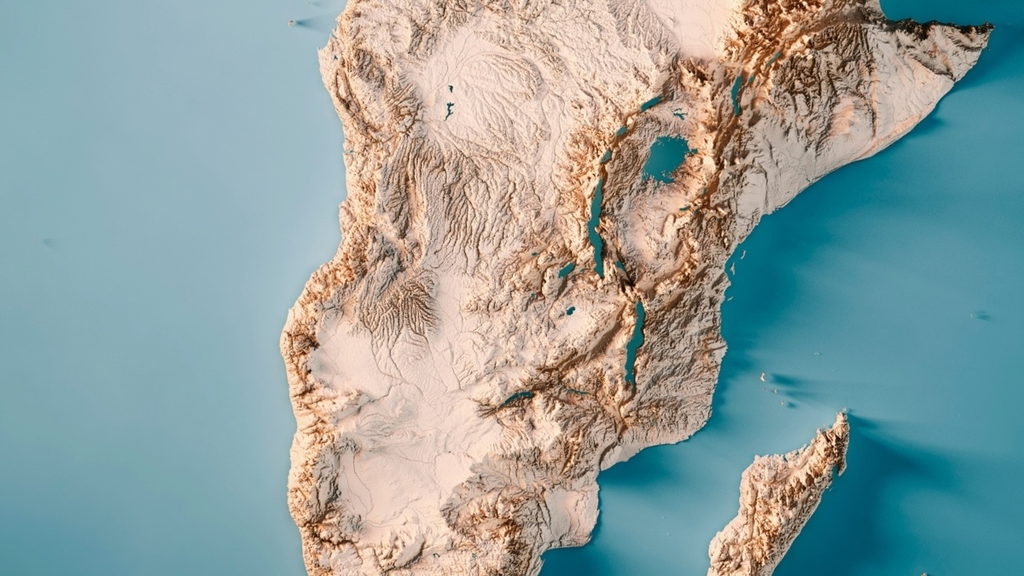
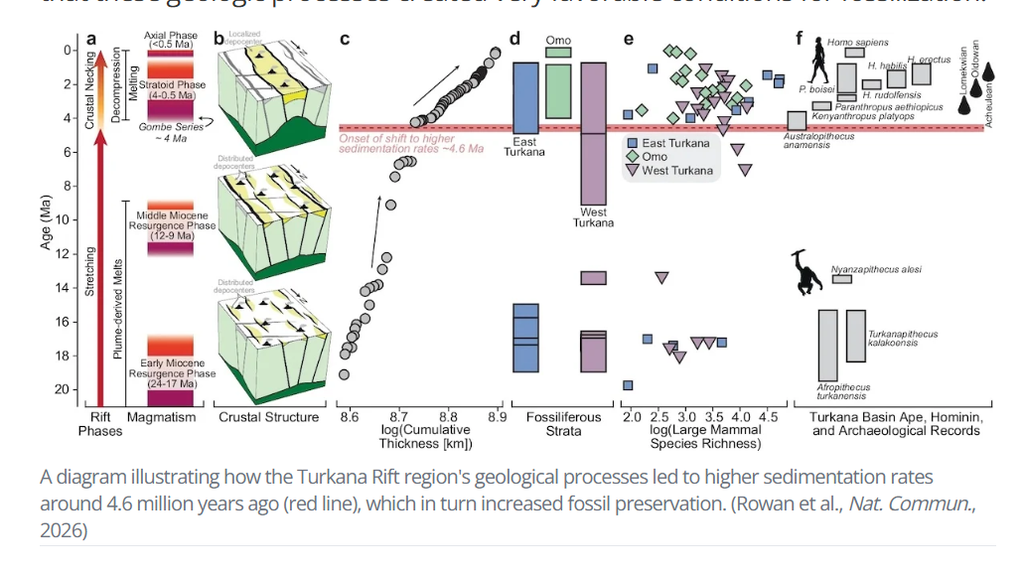
- The Crust is “Necking”: Geologists focused on the Turkana Rift region (spanning Kenya and Ethiopia) and found that the Earth’s crust has thinned down to just 13 kilometers (8 miles). In geology, when crust thins past 15 km, it enters a critical threshold called “necking”—stretching thin until it breaks.
- A New Ocean in the Making: As the Nubian Plate (west) and Somali Plate (east) pull apart, magma will eventually erupt to form new seafloor, allowing water from the Indian Ocean and Red Sea to flood in and create a brand-new ocean basin.
- Connection to Human History: The onset of this “necking” phase roughly 4 million years ago created the exact environmental conditions needed to preserve early human fossils in the East African Rift.
Why This Discovery is Significant
While words like “happening faster than expected” sound dramatic, geology operates on a timeline of millions of years. However, this finding is crucial for several reasons:
- A Front-Row Seat to Earth’s Evolution: Most ocean-formation events in Earth’s history happened hundreds of millions of years ago. The Afar Depression and East African Rift give scientists a live laboratory to study how continents divide.
- The Red Sea & Gulf of Aden Precedent: We can already see the future of the East African Rift by looking just north at the Red Sea and Gulf of Aden—two marine basins formed by the same tectonic mechanics.
Read the full report on ScienceAlert: https://www.sciencealert.com/africa-is-breaking-apart-faster-than-we-thought-forming-a-new-ocean